B2B requirements · Evidence governance · Commercial decision support
Account Intelligence
Evidence before forecast: a B2B product requirements and decision-system case study on turning uneven account records into defensible commercial actions.
- Status
- Questathon prototype · public repository
- My role
- Product requirements and decision logic for a challenge-built prototype.
Created in the FlytBase Questathon 2026 context. No customer deployment is claimed.
In two minutes
- Problem: a large “worth up to” value is potential pipeline, not automatically substantiated business, and account reviews are time-boxed.
- Decision: include a value in the book only when a verified fact states the same amount. Rank actions with deterministic rules, not opaque win probabilities.
- Built: a Next.js prototype with an evidence inspector, deterministic readiness, risks and gaps.
- Unproven: no customer deployment, no pipeline uplift, no automated test suite committed.
Built
- Portfolio briefing and account drill-down views
- Evidence inspector with source linkage
- Deterministic readiness states, risks and evidence gaps
- Cached state with a shared upstream cooldown
- Guarded, secret-gated note write-back
Proposed
- Evaluation metrics: decision accuracy, time to understanding, action usefulness
- Reviewer or leader role as a secondary audience
Not claimed
- Customer deployment or adoption
- Causal pipeline uplift
- Independent verification of claims
- A win-probability model or broad team permissions
- A committed automated test suite
The account review is a decision problem
HypothesisA commercial manager needs to know what is defensible, who can change the outcome and what needs attention now.
Job to be done: when reviewing a portfolio, show me what can be defended, why, and what to do next.
- Information is fragmented: accounts, opportunities, stakeholder names, facts, paperwork and deadlines arrive as uneven records.
- Forecast can overstate certainty: a large worth_up_to value is potential pipeline, not automatically financially substantiated business.
- Time is constrained: account managers must find blockers, missing proof and next steps quickly.
A Monday portfolio review, not another contact list
HypothesisSuccess criterion: every commercial claim should be inspectable back to source records, or explicitly marked unsupported.
Primary user
Enterprise account manager reviewing several accounts. Needs a cross-account summary, evidence-backed value, stakeholder access, blocker history and ordered next actions.
Secondary
Reviewer or leader. Needs traceable explanations before trusting opportunity value or readiness. A proposed audience, not verified users.
Five questions, one product surface
ProposalNarrower than a CRM suite: aggregation, evidence and decision support rather than sales automation.
- What is it worth? Potential pipeline versus the substantiated book.
- Who matters? Stakeholder roles, access and relationships.
- What next? Ranked actions from blockers and evidence gaps.
- What is at risk? Open blockers, deadlines and dependencies.
- What is missing? Unknown, unverified and unsupported claims.
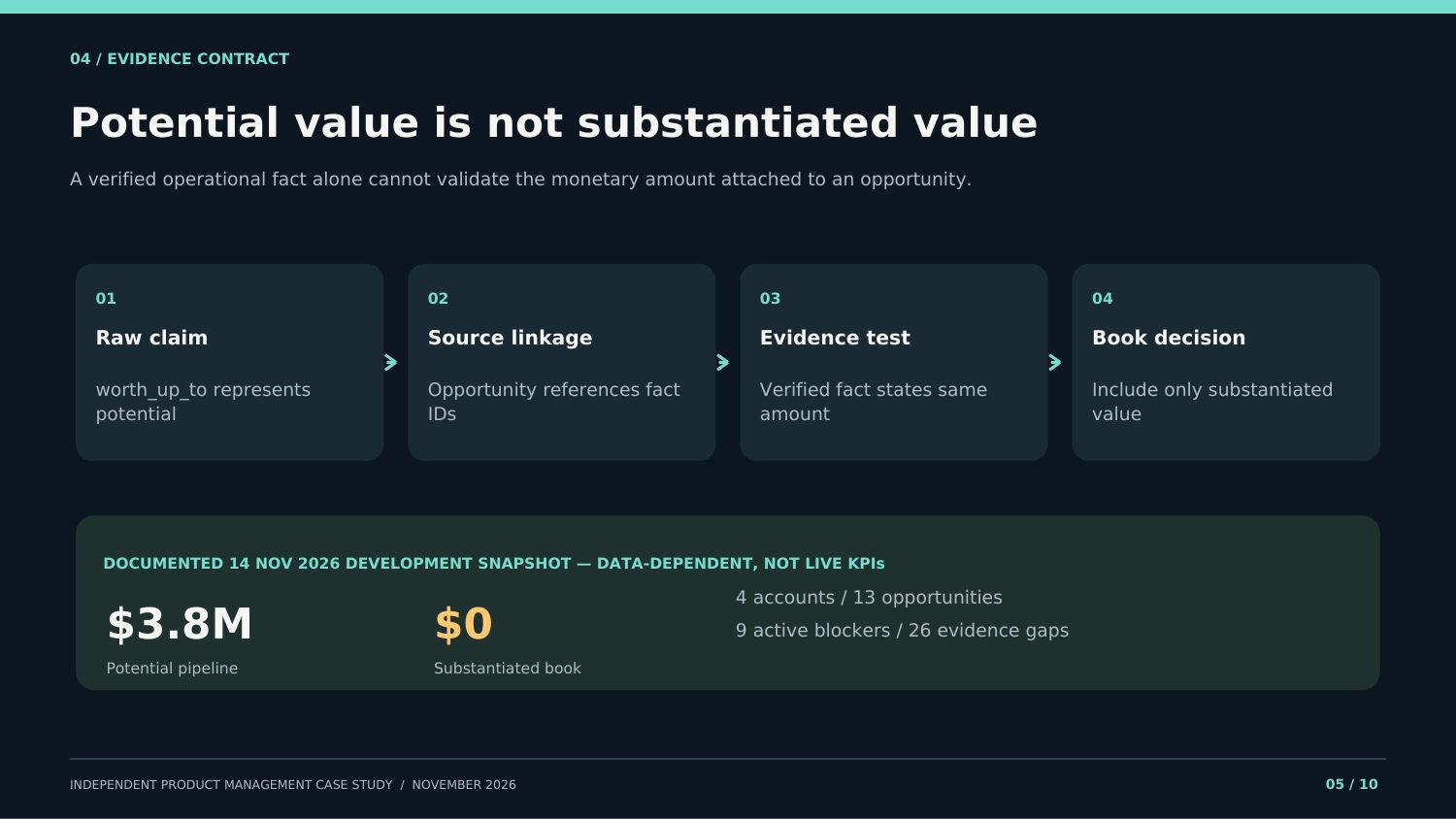
Potential value is not substantiated value
BuiltA verified operational fact alone can't validate the monetary amount attached to an opportunity.
The contract has four steps: a raw claim says worth_up_to is potential; the opportunity references fact IDs; a verified fact must state the same amount; only then is the value included in the book.
- $3.8M
- Potential pipeline
- $0
- Substantiated book
- 4 / 13
- Accounts / opportunities
- 9 / 26
- Active blockers / evidence gaps
A documented 14 Nov 2026 development snapshot of the prototype's data. It depends on the account feed and is not a live KPI or a business result.
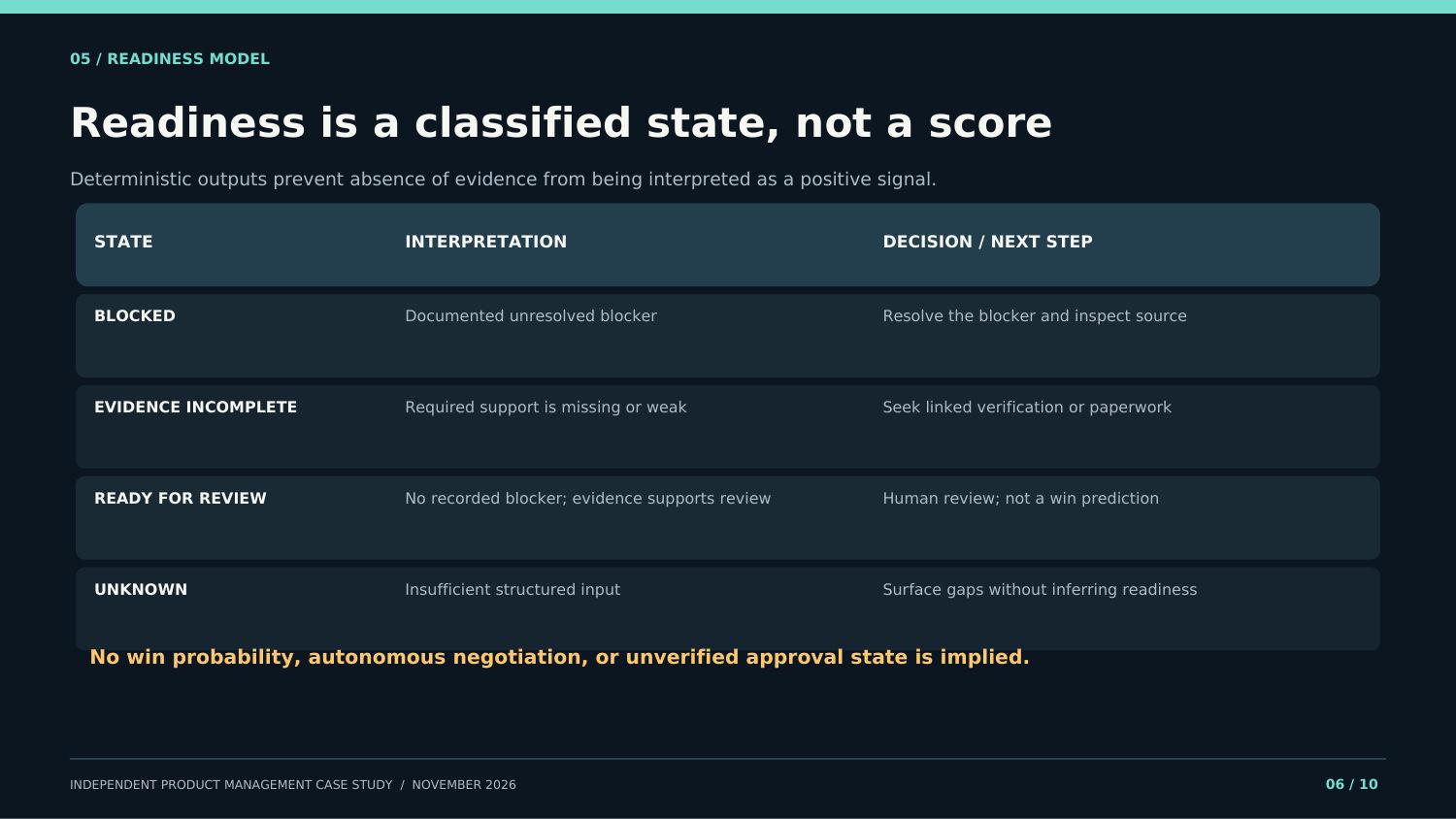
Readiness is a classified state, not a score
BuiltDeterministic outputs stop the absence of evidence from reading as a positive signal.
No win probability, autonomous negotiation or unverified approval state is implied.
Blocked
A documented unresolved blocker. Next: resolve it and inspect the source.
Evidence incomplete
Required support is missing or weak. Next: seek linked verification or paperwork.
Ready for review
No recorded blocker and evidence supports review. Next: human review. Not a win prediction.
Unknown
Insufficient structured input. Surface the gaps without inferring readiness.
From portfolio to defensible action
BuiltMission Control scans accounts, blockers and gaps. Account drill-down shows opportunities and stakeholders. The evidence inspector exposes the raw record and fact status. The last step is a next action: resolve the blocker or request proof.
Design principle: keep source, interpretation and commercial decision separate, even when all three share a screen.
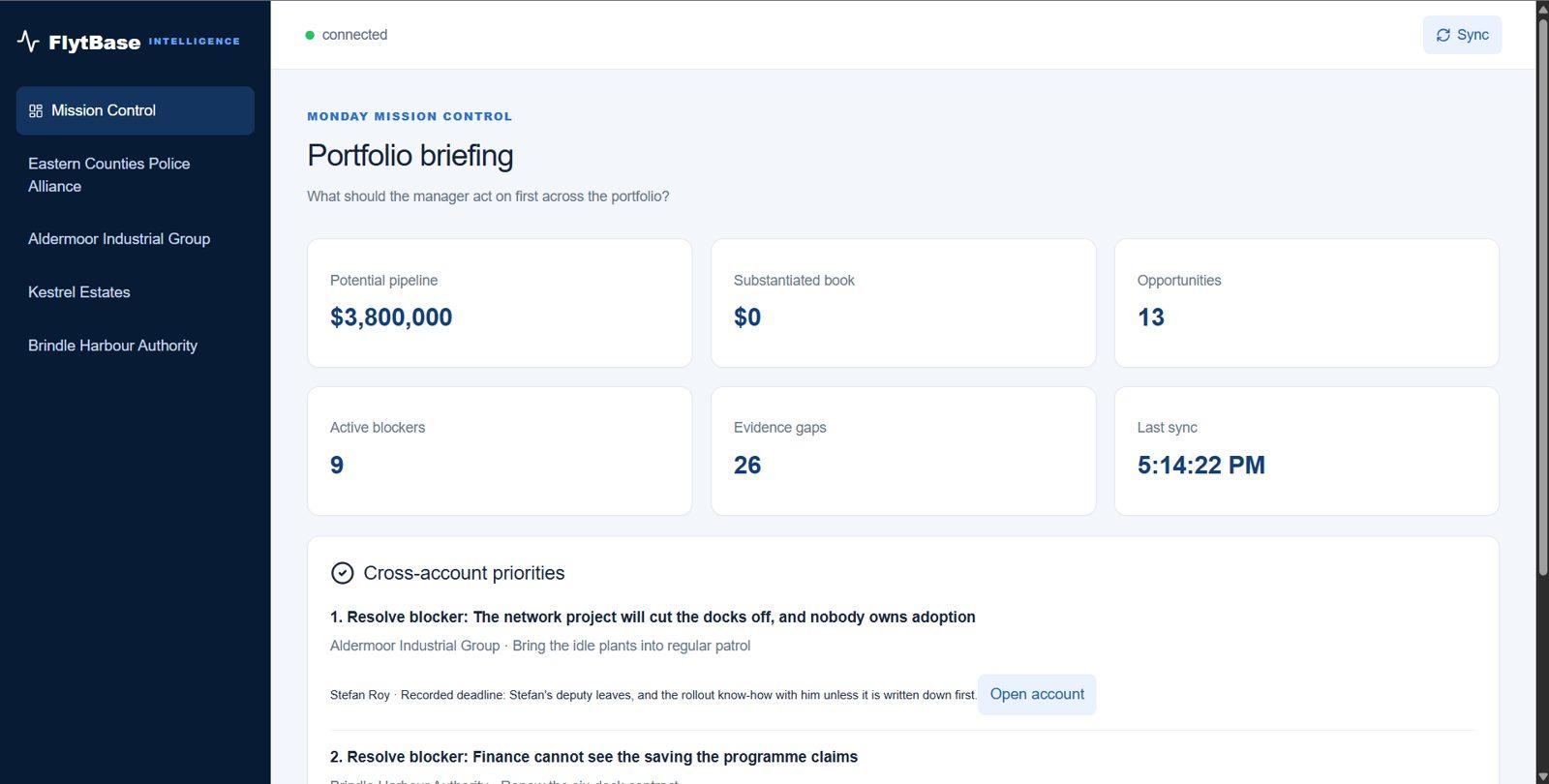
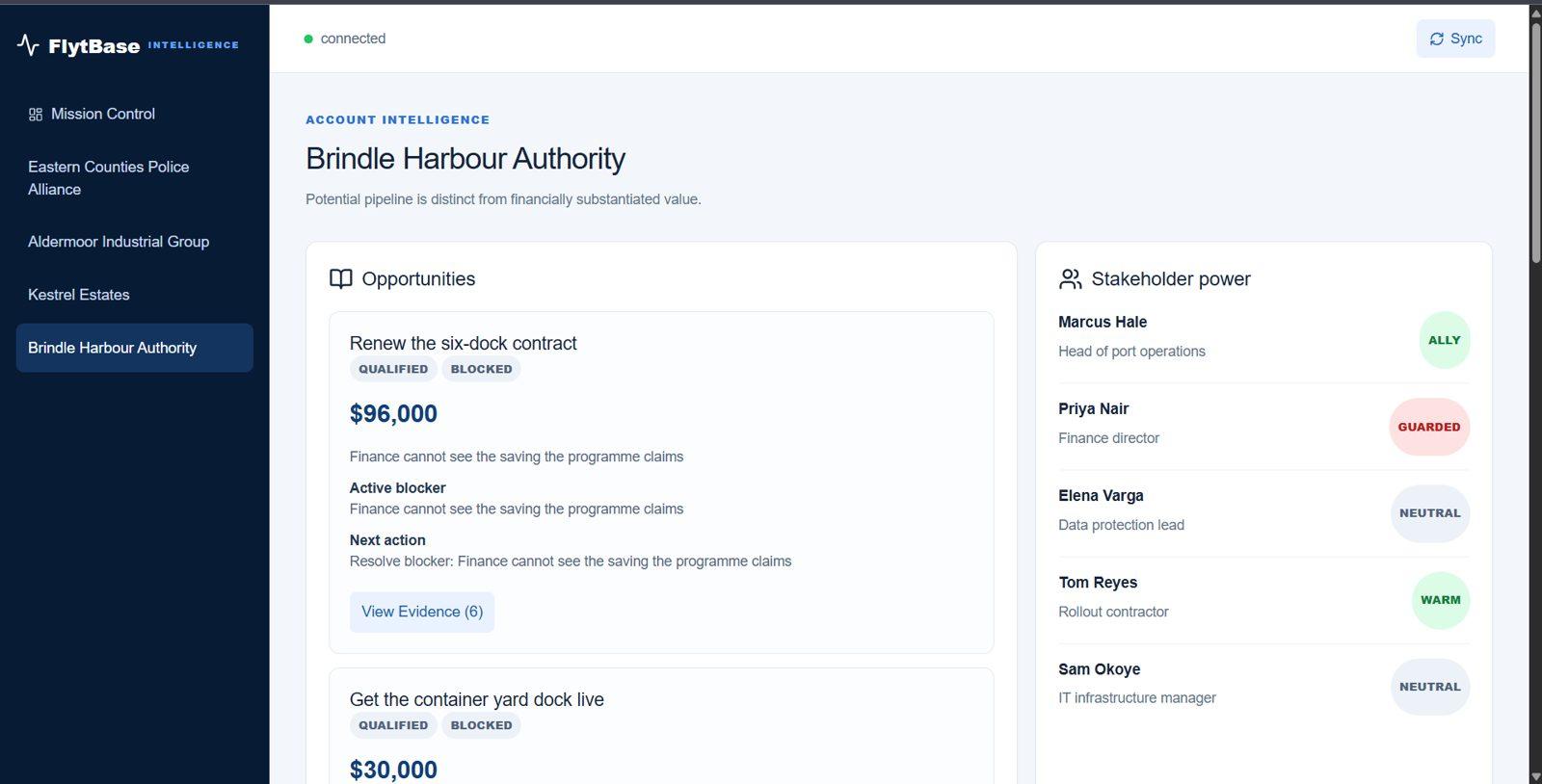
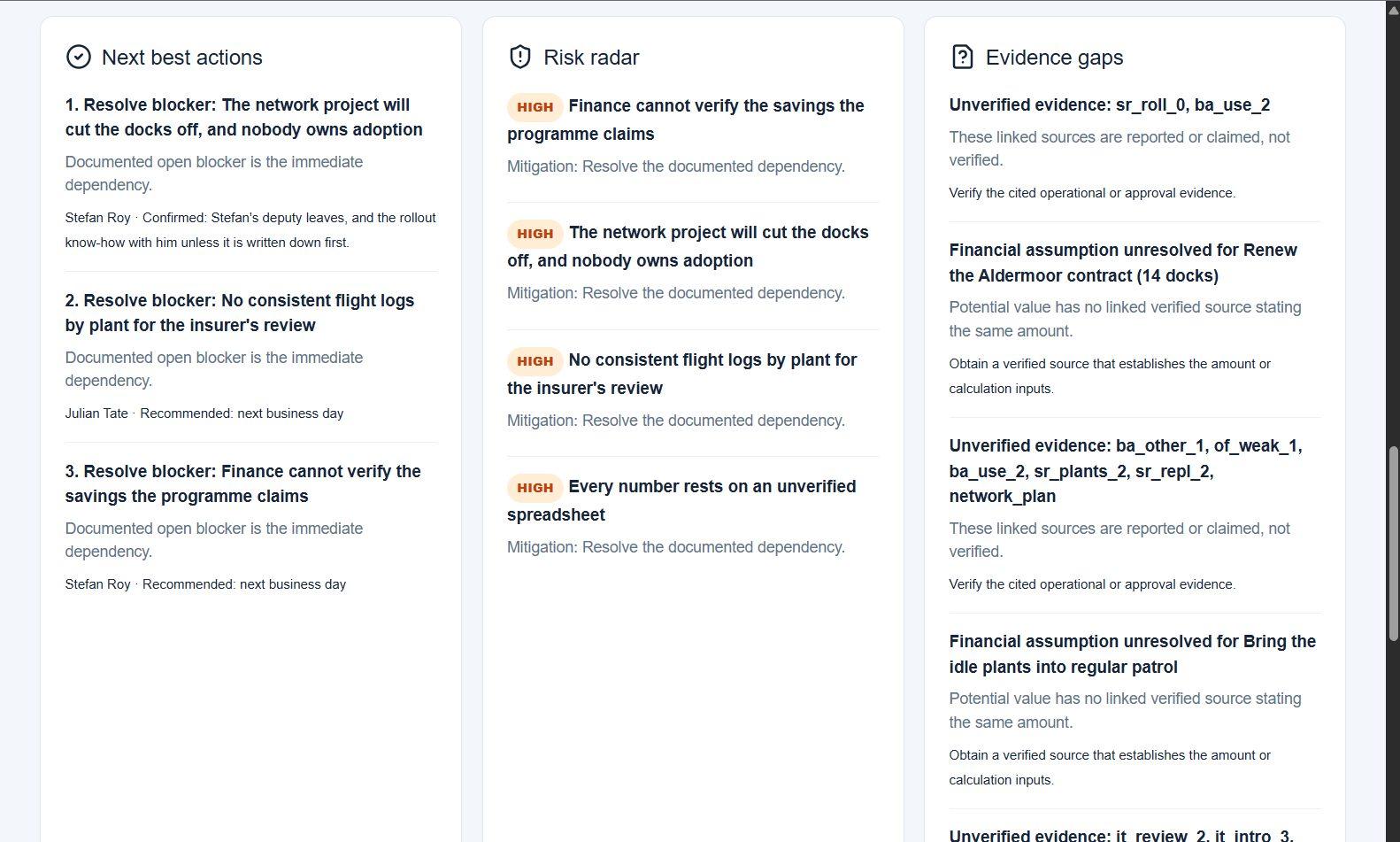
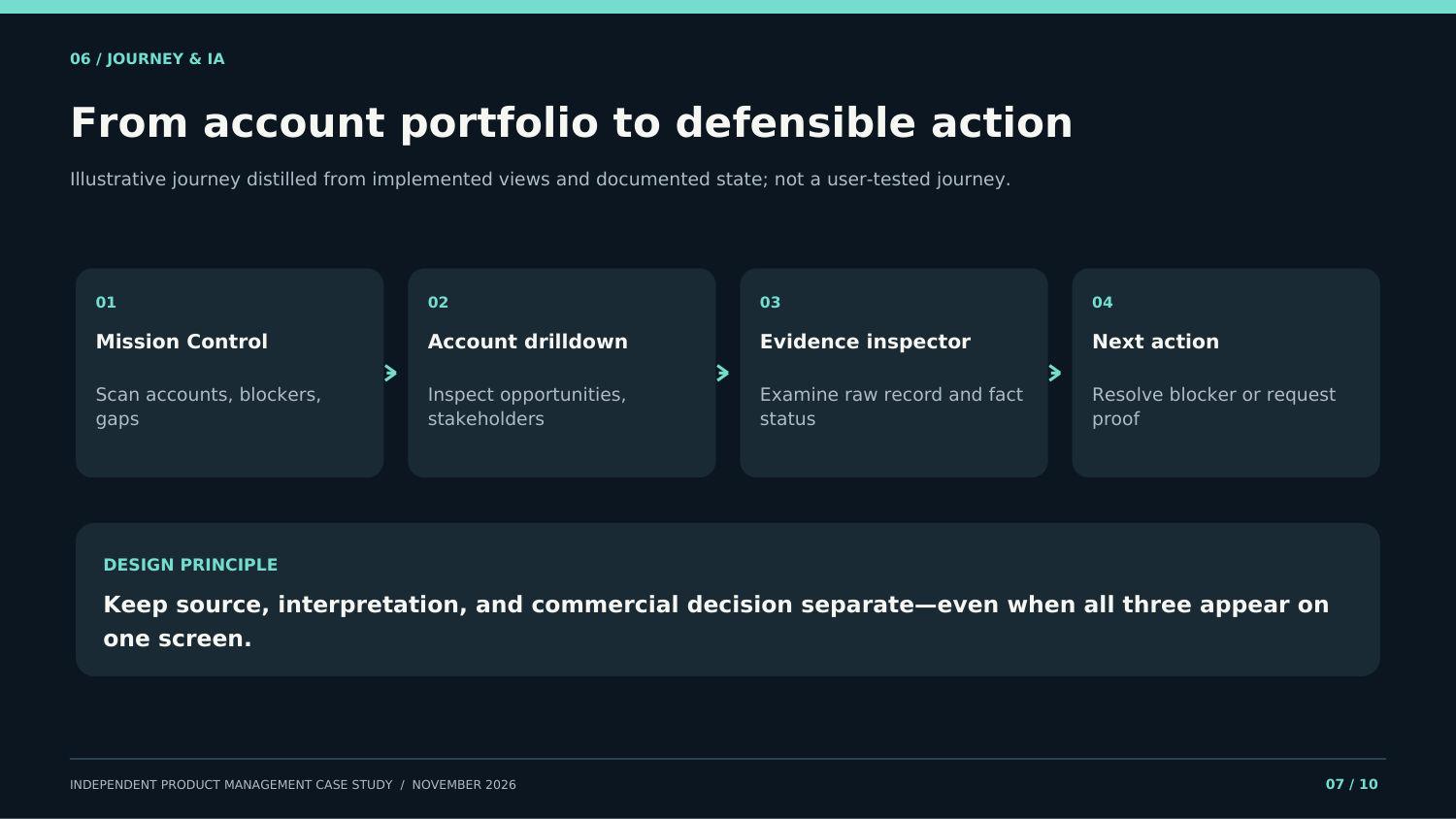
Boundary. The journey is not a user-tested flow.
What I refused to automate
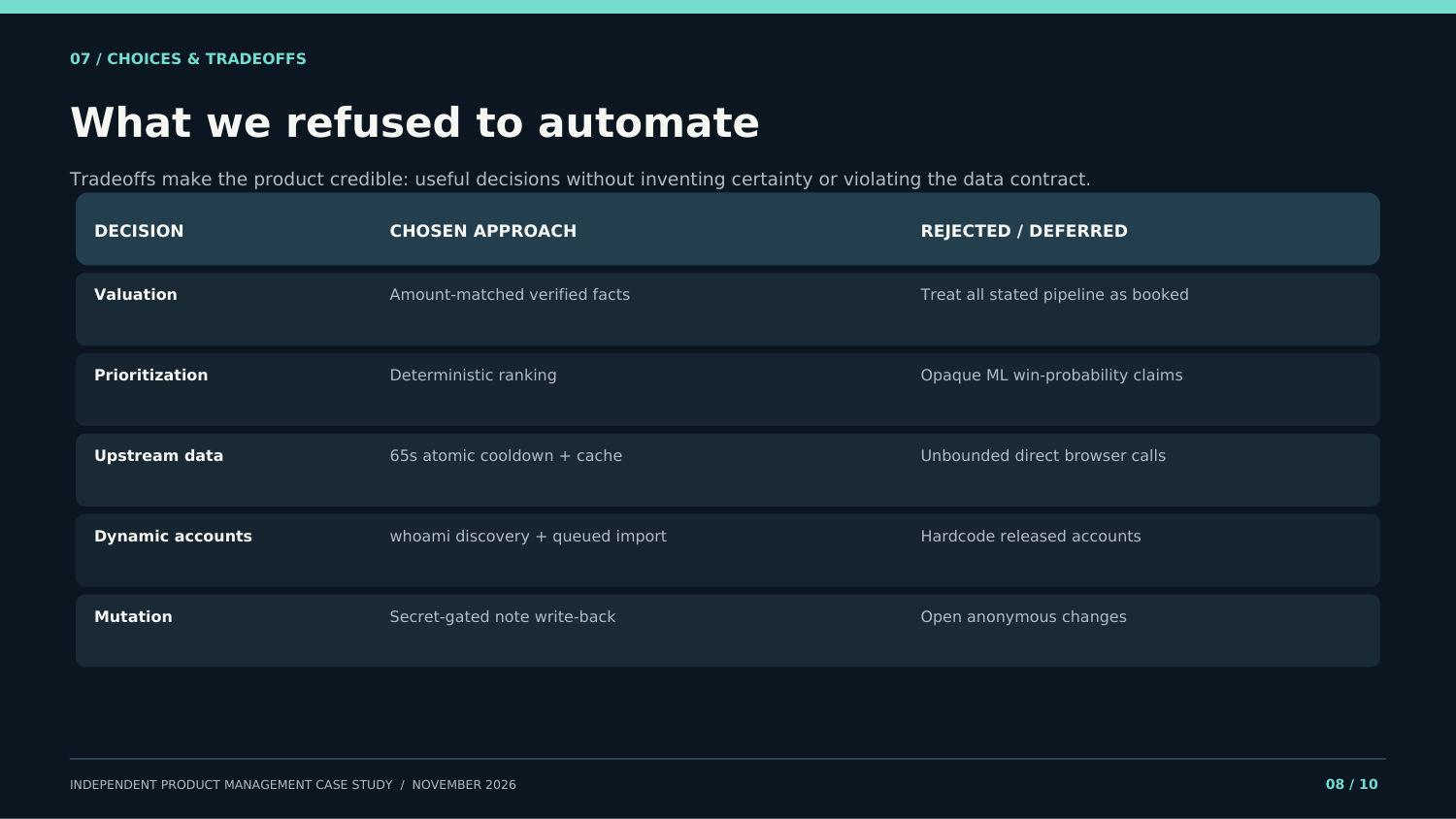
BuiltUseful decisions without inventing certainty or violating the data contract.
Valuation
Chosen: amount-matched verified facts. Rejected: treating all stated pipeline as booked.
Prioritisation
Chosen: deterministic ranking. Rejected: opaque ML win-probability claims.
Upstream data
Chosen: a 65-second atomic cooldown plus cache. Rejected: unbounded direct browser calls.
Dynamic accounts
Chosen: account discovery with a queued import. Rejected: hard-coding released accounts.
Mutation
Chosen: secret-gated note write-back. Rejected: open anonymous changes.
Prove decision quality before productivity uplift
Target- Decision accuracy: share of displayed supported amounts that trace to qualifying source evidence.
- Time to understanding: time to identify the top blocker and its source for a sampled account.
- Action usefulness: reviewer judgement of the relevance and clarity of next actions.
- Guardrails: unsupported financial claims, stale sync visibility, duplicate events, unauthorised writes, false deadline alarms.
Boundary. These are proposed evaluation metrics. The repository doesn't demonstrate production customer outcomes.
What exists and what remains to be proved
Implemented and documented: a Next.js app with Redis caching and a server-only MCP client, an evidence inspector, deterministic readiness, risk and gaps, and guarded note write-back.
Not established: customer deployment, causal pipeline uplift, independent claim verification, a win-probability model, broad team permissions, a committed automated test suite.
No public demo is linked: the deployment currently requires a sign-in. The repository and screenshots show the implemented views.